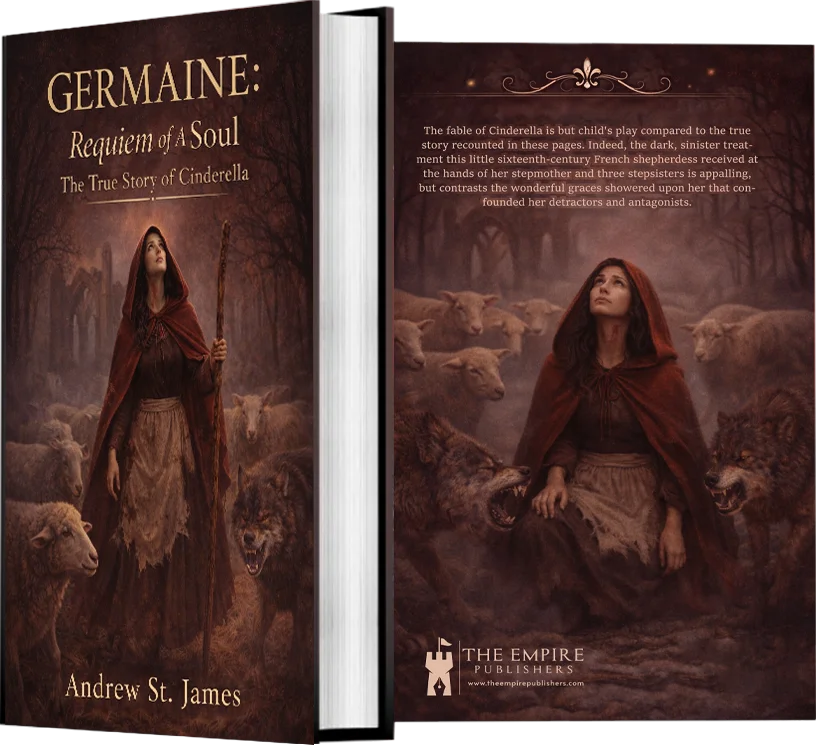
The true story of Cinderella began with the birth of Germaine Cousin around 1579 in the small town of Pibrac, just twenty-four kilometers west of Toulouse, nestled away in the French countryside. It was a small town, and all came to know about the mysteries surrounding this humble shepherdess. Germaine was born with a limp arm and suffered from scrofula, which is an infection of the lymph nodes of the neck that develops into bluish-purple abscesses that often leak. These nontuberculous sores were horrifying to look at, but were not contagious. Known as the king’s evil, even the Anglican Church’s Book of Common Prayer in 1633, contained ceremonies meant to ward off the evil, malevolent spirits many believed were conduits of the disease. Also, by the sixteenth century, the plague was still periodically sweeping through Europe, claiming many lives. It is in this context that little Germaine began her life. What is captivating about this little child is that her life resembles that of the fable Cinderella, in that her wicked stepmother and three mean-spirited stepsisters did physically and mentally abuse her.
The story of Cinderella has been told, some say, since first-century Greece, but most believe that the version we have all come to enjoy as children was written by Charles Perrault in 1697, under the title “Cendrillon,” a story in “Histoires ou contes du temps passé.” Cendrillon, or, as we know her in English, Cinderella, has a difficult and torturous life plagued with abuse, but, through the power of magic, is delivered from the grip of her wicked stepmother and stepsisters. A tragic, if not hopeless, story in which the belief in magic becomes the precondition for escaping the hardships and tragedies of life. At some point, however, many transition to a mindset where make-believe stories no longer excite their intellect or imagination. Enter Germaine, who, only through humility, love, charity, perseverance, and submission to God’s most holy will, brings deep, transformational change to her family and town, and perhaps, with time, the whole nation of France and of the world.